
Honeygar Farm is a rare peatland in Somerset where ancient wooden trackways and other waterlogged remains have survived for thousands of years. These sites are unusual because the peat preserves organic materials that would normally decay, giving us a glimpse of how people lived long ago. The peat also holds an environmental record, showing changes in plants, insects, and climate over thousands of years.
This heritage is fragile. Drying peat, caused by fluctuating water levels and hotter, drier summers, puts both the archaeology and the environmental record at risk. That’s why in March 2025, we worked with Wessex Archaeology, with support from the Species Survival Fund, to check the condition of the site and plan how to protect it.
What archaeological work has happened at Honeygar?
The team surveyed the scheduled ancient monument in what is known as the ‘monument field’ at Honeygar and checked water levels in this area. This field has remained largely undisturbed, making it an important area for archaeological investigation. Wooden structures dating back to around 3700 BC were found just below a metre, about 50cm deeper than earlier assessments suggested. The work also looked at how the peat and remains were coping and helped plan interventions to keep the site wet and stable.
Honeygar: Protecting 6,000 years of peatland heritage


Project Supervisor Max Dampier working on a prehistoric wooden track at the Honeygar site in Somerset © Wessex Archaeology
Why was this work necessary?
Peatlands are natural time capsules. Honeygar’s waterlogged conditions have preserved wood, pollen, plants, insects, and other microscopic remains, giving a record of more than 6,000 years of landscape and climate history.
However, climate change poses a serious threat. Droughts and fluctuating water tables can dry out the peat, damaging both the archaeological remains and the environmental record. Proactive conservation efforts are essential to prevent these losses.
What was found?
The survey revealed ancient trackways and structures just under a metre below the surface, deeper than previous assessments suggested. Hydrological monitoring showed that water tables fluctuate around the 1-metre level, leading to cycles of wet and dry conditions known to damage these delicate monuments.
This information will help guide interventions to stabilise the water levels and ensure the long-term survival of Honeygar’s archaeological treasures.
What does this mean for Honeygar?
Through phase 3 hydrological interventions funded by the Species Survival Fund, Somerset Wildlife Trust aims to stabilise the water tables, keeping the peat wet and protecting both carbon stores and ancient monuments. These efforts not only safeguard a window into our past but also highlight the critical connection between cultural heritage and environmental conservation.
While we work to protect Honeygar’s history, we’re also shaping its future! We have recently submitted plans for a research and teaching facility on the site, which will support long-term peatland monitoring, restoration, and learning. You can read more about these plans and the next phase of work on Honeygar here.
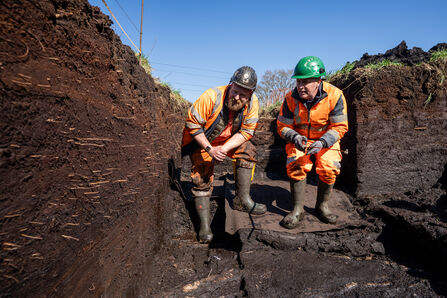
Field archaeologists working on a prehistoric wooden track at the Honeygar site in Somerset © Wessex Archaeology
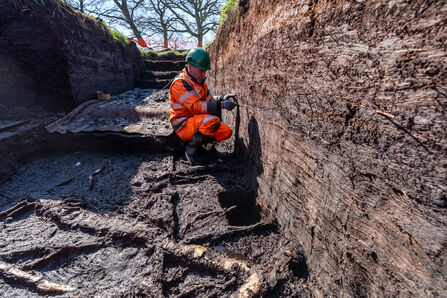
Project Officer Arthur Hollindrake working on a prehistoric wooden track at the Honeygar site in Somerset © Wessex Archaeology
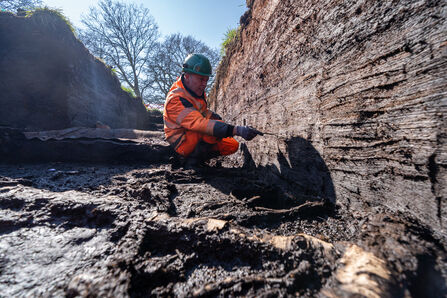
Project Officer Arthur Hollindrake working on a prehistoric wooden track at the Honeygar site in Somerset © Wessex Archaeology