Every £1 invested in restoring rivers could generate over £7 in benefits for nature, communities and the economy, first-of-its-kind analysis finds

Every £1 invested in restoring rivers could generate over £7 in benefits for nature, communities and the economy, first-of-its-kind analysis finds

New river vision and economic analysis provides a blueprint for reimagining England’s rivers at scale, including in Somerset.

A new vision for rivers in England, released today by The Wildlife Trusts, Trent Rivers Trust and Intact Insurance, outlines how nature must be at the heart of plans to restore waterways in Somerset and across England in order to unlock significant economic, environmental and societal benefits.

Across England, rivers are in dire health. Just 14% of rivers currently meet ecological health standards, and many have not improved since their condition was last reported on in 2019. The Government is also likely to miss legal targets to restore almost 80% of England’s waters by 2027.

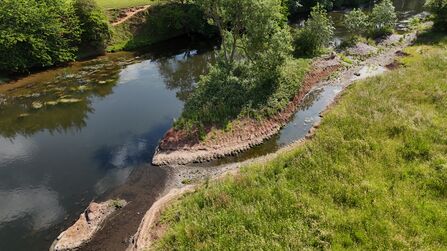
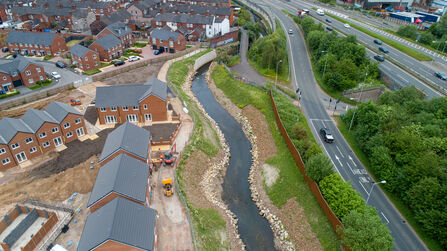
Published today, The Rivers 2040 Vision maps and assesses the impact of restoring the entirety of England’s longest river from source to sea – the River Trent - on nature, the economy and local communities. By reimagining how communities, businesses and land use can work together to bring the Trent back to health, the Vision provides a blueprint for restoring whole river systems across the country. 
 
Here in Somerset, Somerset Wildlife Trust is already supporting rivers across the county. The Trust has an ambitious plan to create up to 20km of woodland corridors along the rivers Brue and Tone, helping to restore nature, improve water quality and reduce flood risk across Somerset. Working with more than 30 landowners, the project will establish broad strips of riverside woodland to reconnect habitats and show how nature-based solutions can build resilience to climate change. 

James Grischeff, Director of Nature Recovery at Somerset Wildlife Trust said: "By restoring woodland along our riverbanks, we can reconnect fragmented habitats, provide vital shade for rivers during hotter summers, and improve conditions for fish and other priority species. These woodland corridors will also help trap sediment, nutrients and pollutants before they enter our rivers. The benefits extend far beyond the riverbank. At a catchment scale, the project will reduce flood risk, increase water storage, improve water quality and lock up carbon in woodland and soils, helping Somerset become more resilient to a changing climate." 
 
Ahead of expected Government reforms to the water system in England, and as drought, flooding, pollution and unequal access to nature intensify, the Vision also includes first-of-its-kind economic analysis. The findings reveal a substantial potential return from restoring the Trent; an estimated investment of £43 million a year over the next 30 years could generate approximately £10 billion in economic benefits, with every £1 invested in nature-led river restoration potentially delivering more than £7 in benefits. 
 
Yet, while the economic benefits of nature-led river restoration are staggering, the Vision argues that current efforts remain fragmented and underfunded. Instead, three key areas of change are needed to restore and recover the health of England’s rivers: 

  • Deploying nature-based solutions at scale; 
  • Growing local control of water; 
  • And a long-term water strategy that recognises nature as critical infrastructure.

Dr Rob Stoneman, director of landscape recovery at The Wildlife Trusts, says: “From scandalous pollution to increasing flood risk, we know that people right across the country care deeply about the health of our waterways and want to see an end to the cocktail of threats facing them. The scale of the challenge is huge, but our new vision for rivers is a call to arms; there is an enormous prize to be won if we get this right.  
 
“As our mapping of the River Trent proves, we must work together across whole catchments – and the communities, businesses and local authorities within them – to embed nature-based solutions into the heart of river restoration efforts. Only then, with national and regional policy recognising that nature is necessary to the health of our waterways, can investment in river recovery truly deliver greater climate resilience, local prosperity and bring wildlife back to our waterways.” 
 
The vision shows how nature-led restoration across Somerset's catchments, floodplains and riverbanks can deliver a wide range of benefits, from storing carbon and reducing flood risk to improving water quality, creating green jobs, and supporting people's health and wellbeing. 
 
Chris Reid, deputy senior vice president at Intact Insurance, says: “As extreme weather becomes more frequent, we need to think differently about how we protect our communities. Restoring rivers, floodplains and wetlands can help manage water, reduce flood risk and make the places where people live and do business more resilient.” 
 
“The Rivers 2040 Vision shows what is possible when we restore and protect nature at scale. By working with The Wildlife Trusts, we are helping to create healthier rivers that are better able to adapt to a changing climate and build more resilient communities.” 
 
Read The Rivers 2040 Vision here and tune in for the premiere of A River Speaks on YouTube here. 
 
The Wildlife Trusts are calling on people across Somerset and beyond to support stronger action for rivers and waterways. Add your voice here. 

About Somerset Wildlife Trust

Press Office: For more information, please contact Lauren Flitcroft on lauren.flitcroft@somersetwildlife.org or comms@somersetwildlife.org 

About Somerset Wildlife Trust: 

Somerset Wildlife Trust is a nature conservation charity. Its purpose is to restore and protect the populations of species across the county and the habitats they call home. Climate change is one of the greatest threats to nature, natural habitats and the ecosystems that support our life on earth.  Our aims are to help address both the ecological and climate crises and put nature back into people’s lives. 

Nature reserves and protected sites on their own are not enough. In order to reverse the decline in species’ diversity and abundance, and create resilient landscapes and habitats for wildlife and for people that can adapt to climate change, we need to:  

  • Encourage and support landowners to manage their land positively for nature; create more space for nature 
  • Connect wildlife-rich spaces across the wider landscape to create a robust Nature Recovery Network for Somerset 
  • Create a movement of people – at least 1 in 4 – that take action for nature’s recovery across Somerset as part of Team Wilder 

Nationally, the Wildlife Trusts are calling for at least 30% of land to be managed positively for nature by 2030. What we do in Somerset must contribute to that national ambition. You can read our full strategy here.

About The Rivers 2040 Vision

Read The Rivers 2040 Vision here and find out more about the premiere of A River Speaks at the Blue Earth Summit here. 
 
The vision reveals three key areas of change are needed to restore and recover the health of England’s rivers: 

  • Deploying nature-based solutions at scale: Nature-based solutions, including reconnecting floodplains, restoring wetlands and peatlands, nature-friendly farming and creating wet woodlands, will be critical to protecting homes, businesses and entire communities from worsening floods and water pollution. But to deliver the greatest benefits, these solutions need to be deployed at scale across whole river catchments. 
  • Growing local control of water: Responsibility for tackling the numerous threats to our rivers, including pollution and pressure on water resources, is fragmented, with no single body accountable for the health of our waterways. A catchment-scale approach, bringing together locally focused investment and expertise through powerful Regional Water Authorities as part of the Government’s devolution agenda, will be critical to tackling these threats and realising the full potential of rivers for communities, nature and the economy. 
  • A long-term water strategy that recognises nature as critical infrastructure: A nature-first approach to all new development, alongside flood risk management plans that put nature-based solutions at their heart, must be embedded in public policy to unlock investment, empower communities in decision-making and hold developers to account.  
  • Just 14% of rivers currently meet ecological health standards, and many have not improved since their condition was last reported on in 2019: New data to drive action to improve England's rivers and lakes - GOV.UK 
  • The Government is also likely to miss legal targets to restore almost 80% of England’s waters by 2027, as warned by the Office of Environmental Protection: OEP finds ‘deeply concerning’ issues with how the laws in place to protect England’s rivers, lakes and coastal waters are being put into practice | Office for Environmental Protection 
  • 1 in 4 properties are predicted to be at risk of flooding by 2050 without action: National assessment of flood and coastal erosion risk in England 2024 - GOV.UK 
  • Length of the River Trent: the Trent is 185 miles from the source at Biddulph Moor to Trent Falls, which is still 38.5 miles to the North Sea. From the source to the sea the Trent is 223.5 miles, making it the longest river in the country. It's the only river whose estuary is named differently to the river. 

About The Wildlife Trusts

The Wildlife Trusts are making the world wilder and helping to ensure that nature is part of everyone’s lives. We are a grassroots movement of 46 charities and one central charity, with more than 945,000 members and over 33,000 volunteers. No matter where you are in Britain, there is a Wildlife Trust inspiring people and saving, protecting and standing up for the natural world. With the support of our members, we care for and restore over 2,600 special places for nature on land and run marine conservation projects and collect vital data on the state of our seas. Every Wildlife Trust works within its local community to inspire people to create a wilder future – from advising thousands of landowners on how to manage their land to benefit wildlife, to connecting hundreds of thousands of school children with nature every year. www.wildlifetrusts.org

About Intact Insurance

Intact Insurance is a leading provider of Commercial and Specialty insurance solutions for businesses of all sizes across the UK and Ireland and through its Global Network in over 150 countries worldwide. Formerly known as RSA Insurance, Intact Insurance is part of Intact Financial Corporation (TSX: IFC), the largest provider of Property and Casualty insurance in Canada and a leading Specialty lines insurer with international expertise. At Intact, our purpose is clear - to help people, businesses and society prosper in good times and be resilient in bad times. For more information visit intactinsurance.co.uk.